
Comprehensive Engineering and Performance Analysis of Lyophilization Platforms_ HiLyph Table Top Series Versus Harvest Right Pro Architecture
This Non Bias Report brought to you by TCI Scientific Innovations LLC
Comprehensive Engineering and Performance Analysis of Lyophilization Platforms: HiLyph Table Top Series Versus Harvest Right Pro Architecture
1. Executive Summary and Industry Context
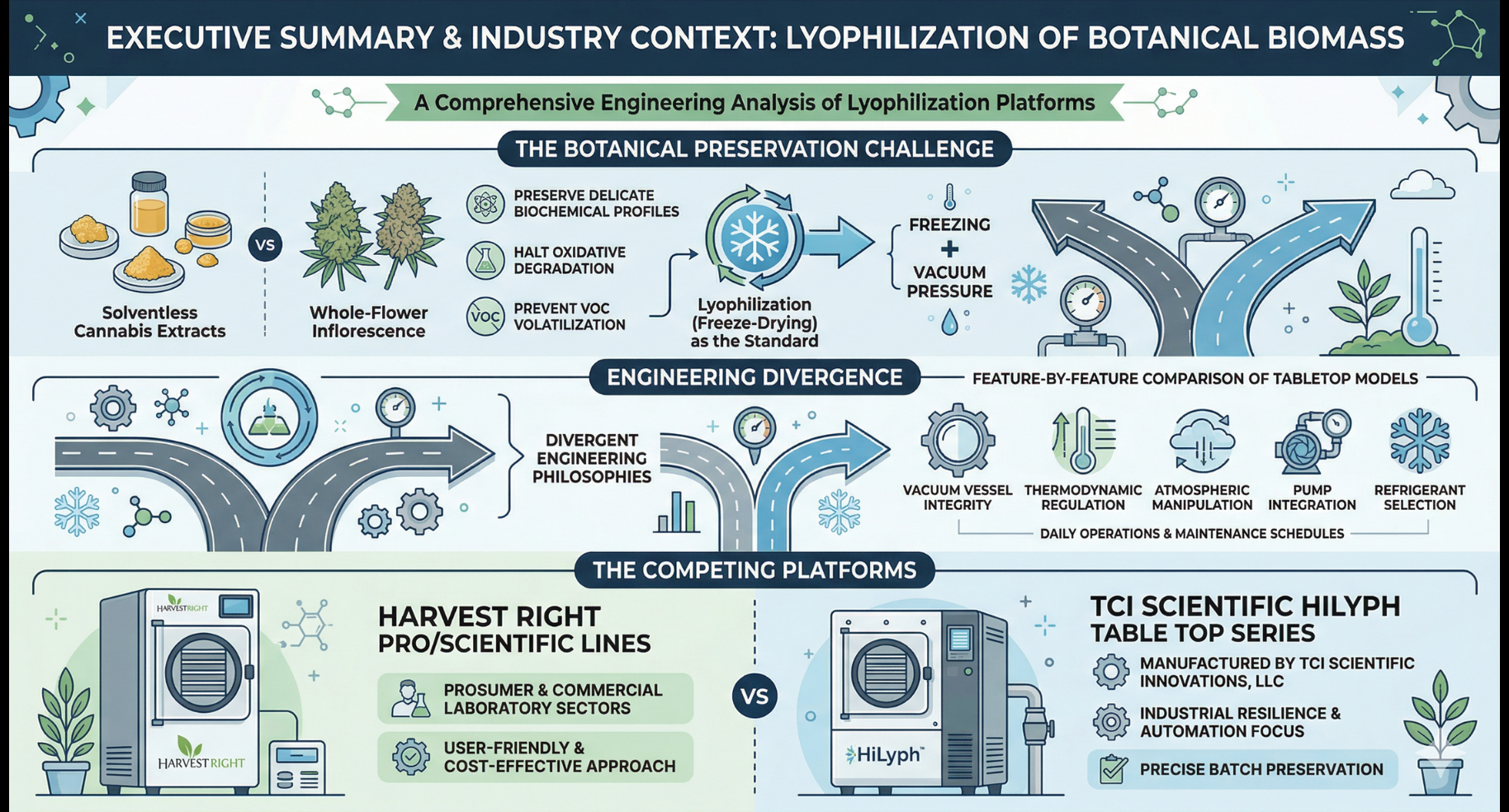
The commercial stabilization of botanical biomass—specifically solventless cannabis extracts and whole-flower inflorescence—relies on the precise manipulation of thermodynamics and atmospheric pressure. Lyophilization (freeze-drying) has become the standard for preserving delicate biochemical profiles, halting oxidative degradation, and preventing the volatilization of volatile organic compounds.
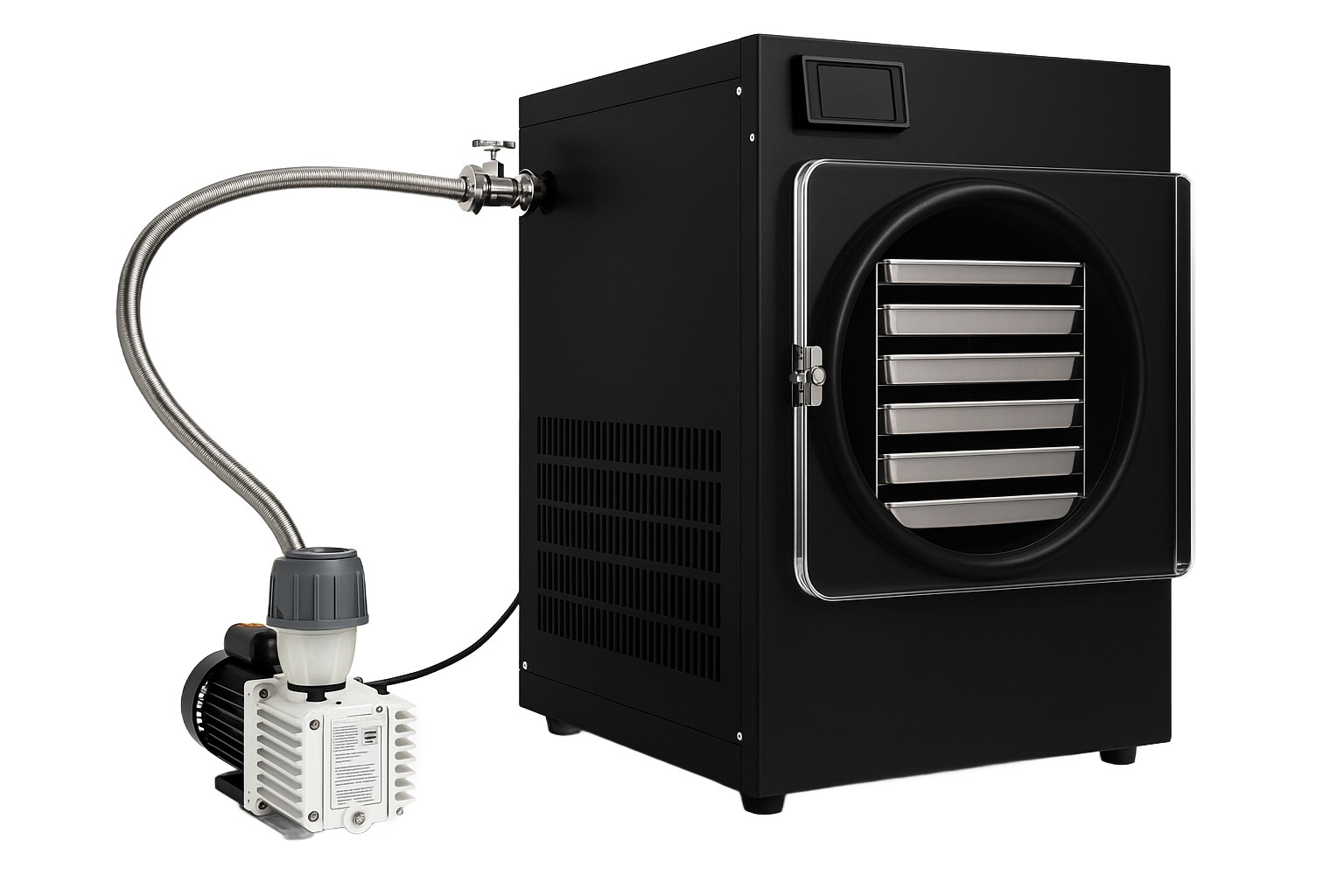
As the market has matured, equipment manufacturers have diverged in their engineering philosophies. Two distinct platforms currently serve the prosumer and commercial laboratory sectors: the Harvest Right Pro/Scientific lines and the HiLyph Table Top Freeze Dryers (manufactured by TCI Scientific Innovations, LLC).
This report provides an objective, feature-by-feature comparison of the tabletop models from both brands. By analyzing vacuum vessel integrity, thermodynamic regulation, atmospheric manipulation, pump integration, and refrigerant selection, this analysis outlines what each platform offers and what those engineering differences mean for the consumer's daily operations and maintenance schedules.
2. Vacuum Vessel Integrity and Electrical Feed-Throughs
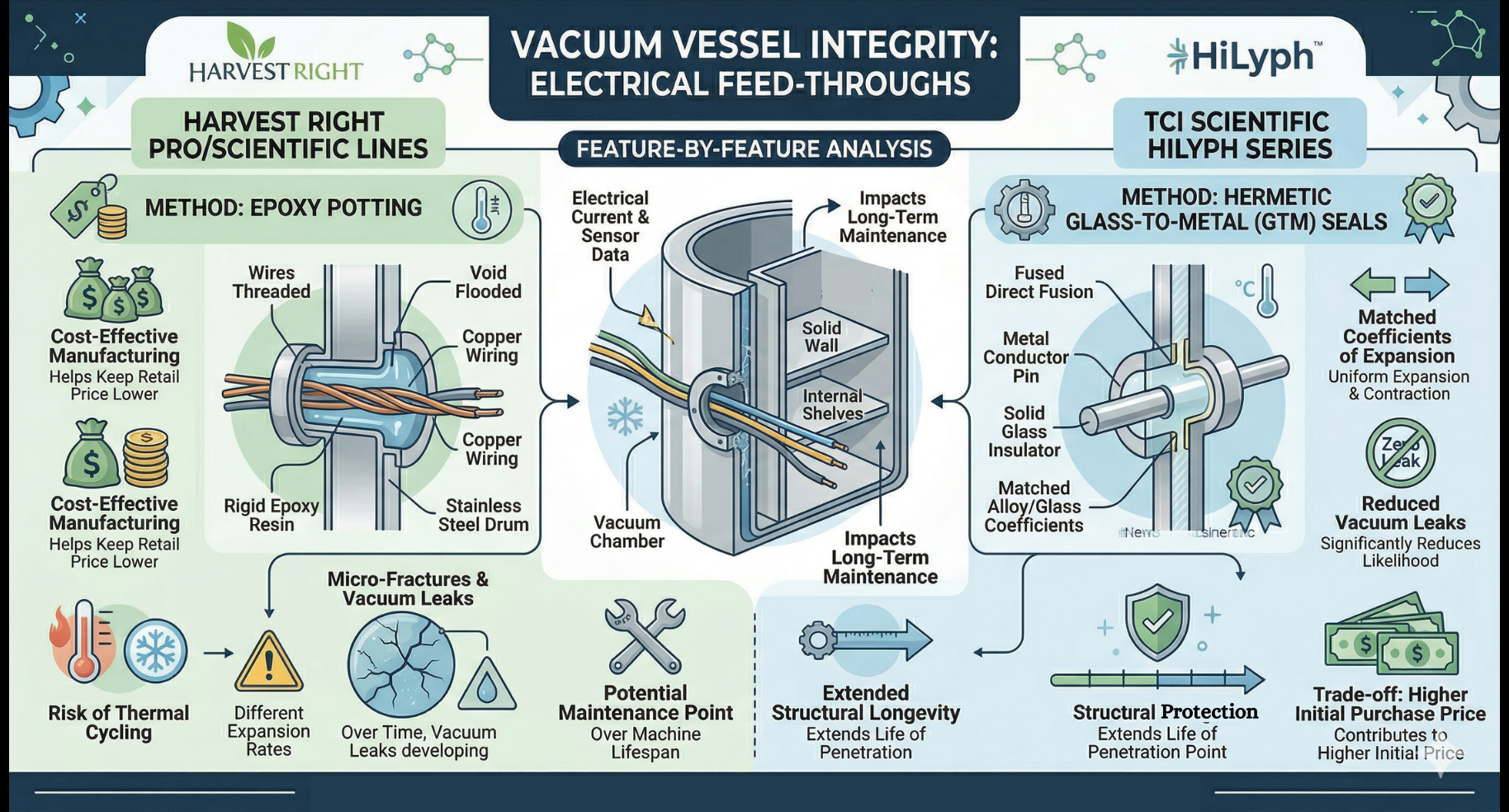
A freeze-dryer must pass electrical current and sensor data through the solid wall of the vacuum chamber to the internal product shelves while maintaining a vacuum. The method used to seal this penetration impacts the machine's long-term maintenance requirements.
2.1 Harvest Right: Epoxy Potting
Harvest Right utilizes an epoxy seal around the copper wiring where it enters the stainless steel drum. In this design, the wires are threaded through a port, and the void is flooded with a rigid epoxy resin.
Consumer Impact:
Epoxy potting is a cost-effective manufacturing technique that helps keep the overall retail price of the machine lower. However, because the stainless steel, copper, and epoxy have different coefficients of thermal expansion, they expand and contract at different rates during temperature shifts. Over time, thermal cycling can create micro-fractures in the epoxy, which may lead to vacuum leaks. For the consumer, this wire harness feed-through represents a potential maintenance point over the lifespan of the machine.
2.2 TCI Scientific HiLyph: Hermetic Glass-to-Metal Seals
The HiLyph series utilizes industrial-grade hermetic glass-to-metal (GTM) seals for its electrical feed-throughs. The metal conductor pin is fused directly to a solid glass insulator.
Consumer Impact:
The alloys and glass used in a GTM seal share matched coefficients of thermal expansion, allowing them to expand and contract uniformly during temperature shifts. For the consumer, this component significantly reduces the likelihood of vacuum leaks developing at the penetration point, extending structural longevity. The trade-off is that these industrial-grade components contribute to a higher initial purchase price.
3. Thermodynamic Regulation and Shelf Heating
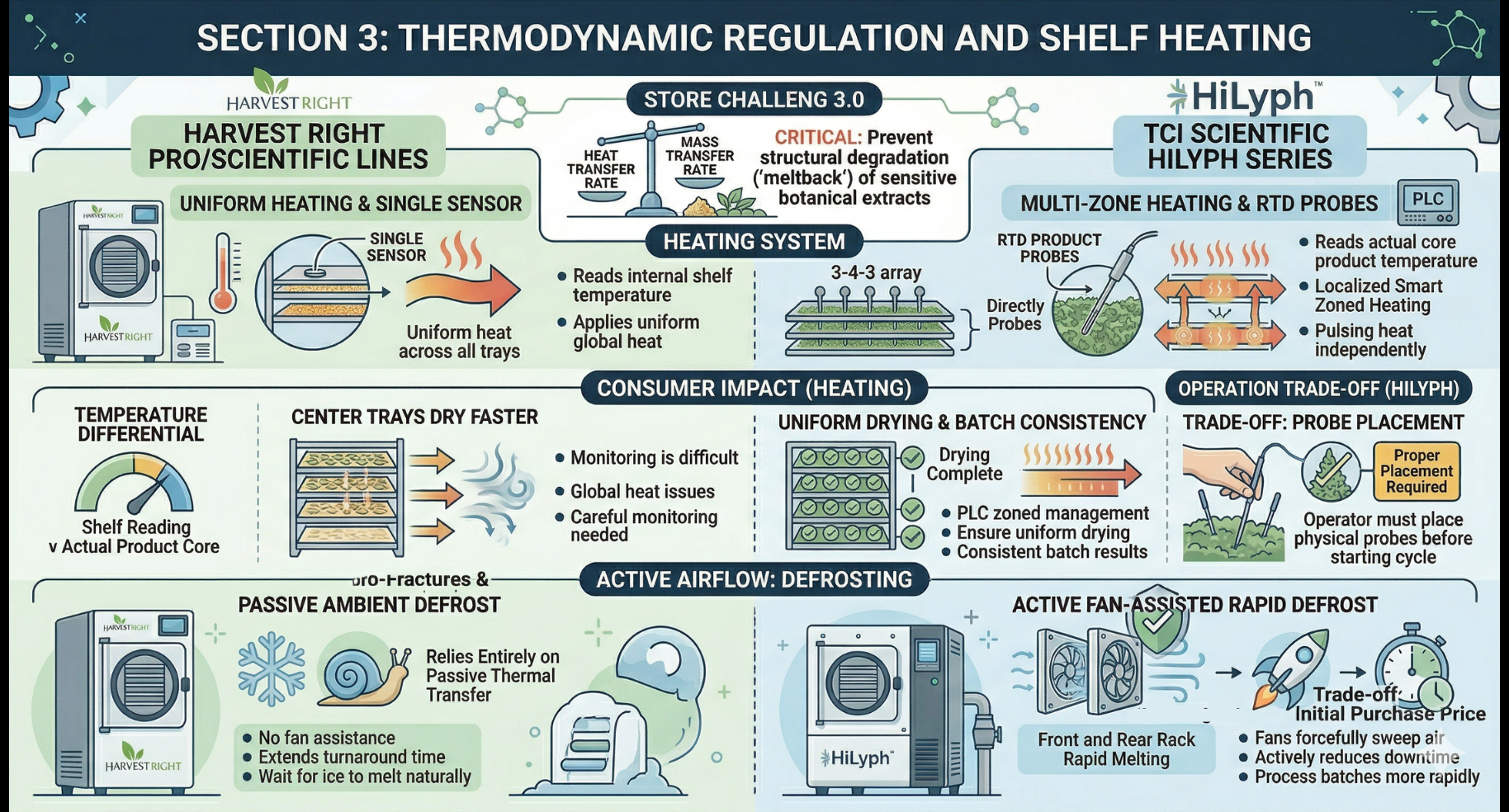
Balancing the heat transfer rate with the mass transfer rate is critical to preventing structural degradation or "meltback" in sensitive botanical extracts.
3.1 Harvest Right: Uniform Heating and Single-Sensor Data
Harvest Right models utilize a single sensor dedicated to reading the temperature of the internal shelf itself, rather than the core temperature of the product. Additionally, the heating system applies uniform thermal energy to all trays simultaneously.
Consumer Impact:
Because the system monitors the shelf rather than the biomass, there is a temperature differential between the reading and the actual product. Furthermore, uniform heating cannot account for the fact that top and bottom trays often lose heat to the cold chamber walls faster than central trays. For the consumer, this requires careful monitoring, as applying the same heat globally can occasionally result in the center trays drying faster than the outer trays.
3.2 TCI Scientific HiLyph: Multi-Zone Heating and RTD Probes
The HiLyph platform utilizes "Smart Zoned Heating" alongside Resistance Temperature Detector (RTD) sensors placed directly into the product across a 2-6-2 or 2-2-2 array.
Consumer Impact:
By reading the actual core temperature of the product in multiple zones (top, middle, and bottom), the system's Programmable Logic Controller (PLC) can pulse heat independently to specific elevations. For the consumer, this zoned thermal management ensures uniform drying across the entire batch, though it requires the operator to properly place the physical probes into the biomass before starting a cycle.
3.3 Active Airflow: Defrosting Capabilities
Harvest Right:
Harvest Right units rely on a passive ambient defrosting protocol.
Consumer Impact:
Without active fan assistance, the system relies entirely on passive thermal transfer to melt the ice trap. This extends the turnaround time between cycles, as operators must wait for the ice to melt naturally.
TCI Scientific HiLyph (Large and XL Models):
The HiLyph Large and XL models are equipped with an active, fan-assisted rapid defrost subsystem, utilizing fans at the front and rear of the rack to pull air across the chamber.
Consumer Impact:
For the commercial operator, the fan-assisted defrost forcefully sweeps air across the frozen chamber walls, actively reducing the downtime between cycles and allowing facilities to process batches more rapidly.
4. Atmospheric Control Capabilities: Deep Vacuum vs. Integrated VPC
The internal atmospheric pressure dictates the speed of sublimation and the retention of volatile compounds.
4.1 Non-VPC Operation (Deep Vacuum Desiccation)
Harvest Right:
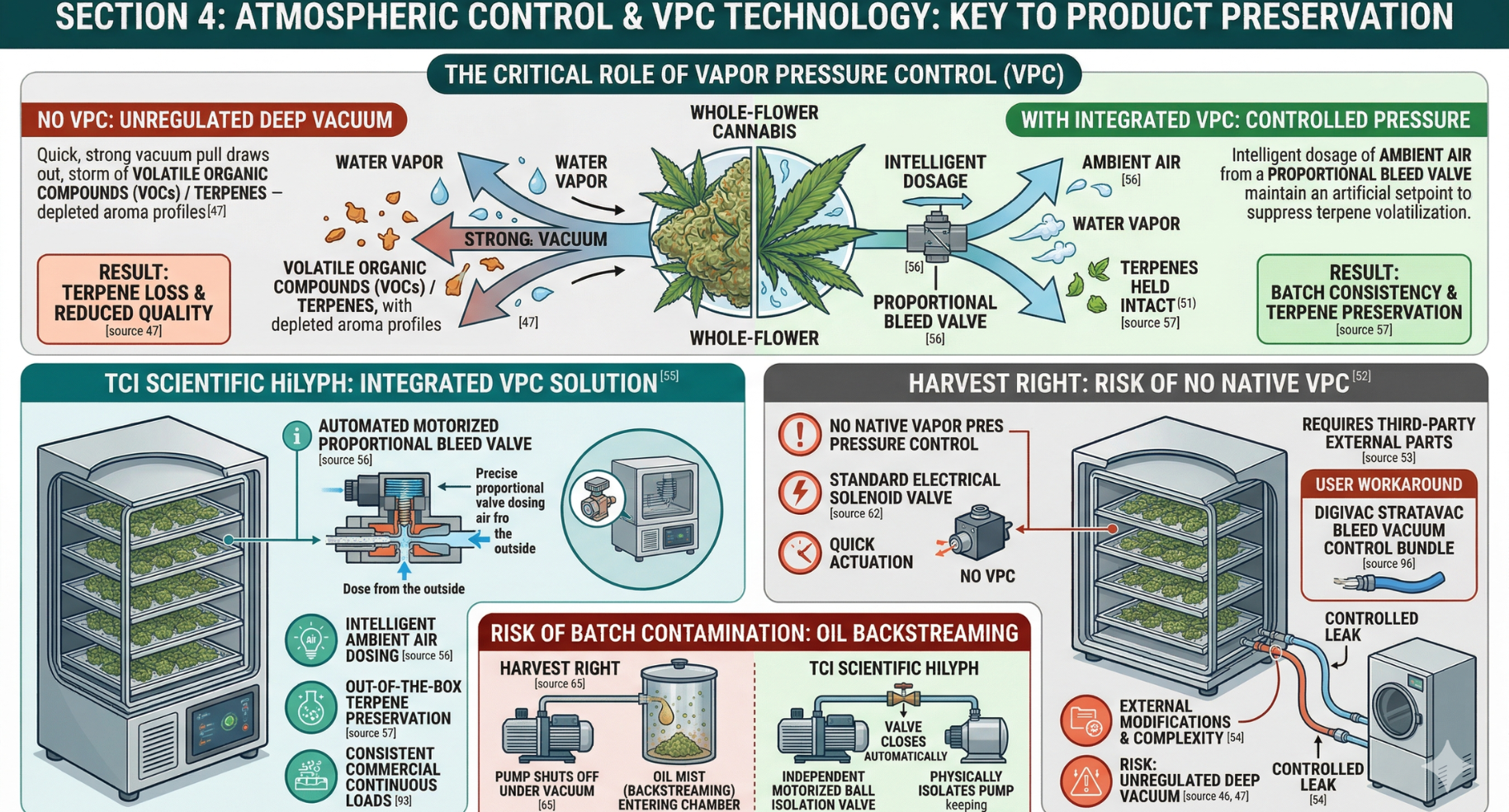
Operating in a deep-vacuum state is the primary native capability of Harvest Right systems, controlled by a standard solenoid valve. This maximizes the speed of water sublimation. However, unregulated deep vacuums can draw volatile monoterpenes out of whole-flower cannabis alongside water vapor.
TCI Scientific HiLyph (Hash Dryers):
The HiLyph Hash Dryer models are engineered for baseline deep-vacuum states necessary for processing solventless ice-water hash. They utilize a motorized ball valve for gradual vacuum actuation and use specific automated logic to balance thermal input against the vacuum pull.
4.2 Vapor Pressure Control (VPC) Operation
To preserve terpenes in whole-flower cannabis, atmospheric pressure must be artificially held at an elevated setpoint to suppress terpene volatilization.
Harvest Right:
Harvest Right systems do not have native Vapor Pressure Control. Operators attempting to process flower typically modify the setup by purchasing a third-party external bleed valve bundle (such as the DigiVac StrataVac controller). This requires external
modifications to the vacuum hoses to introduce a controlled leak.
TCI Scientific HiLyph (Integrated VPC):
The HiLyph Bud Dryer models feature fully integrated VPC technology. The system utilizes an automated motorized proportional bleed valve to intelligently dose ambient air into the chamber. This provides out-of-the-box terpene preservation without requiring external modifications or third-party controllers.
5. Vacuum Pumps and Refrigeration Capacities
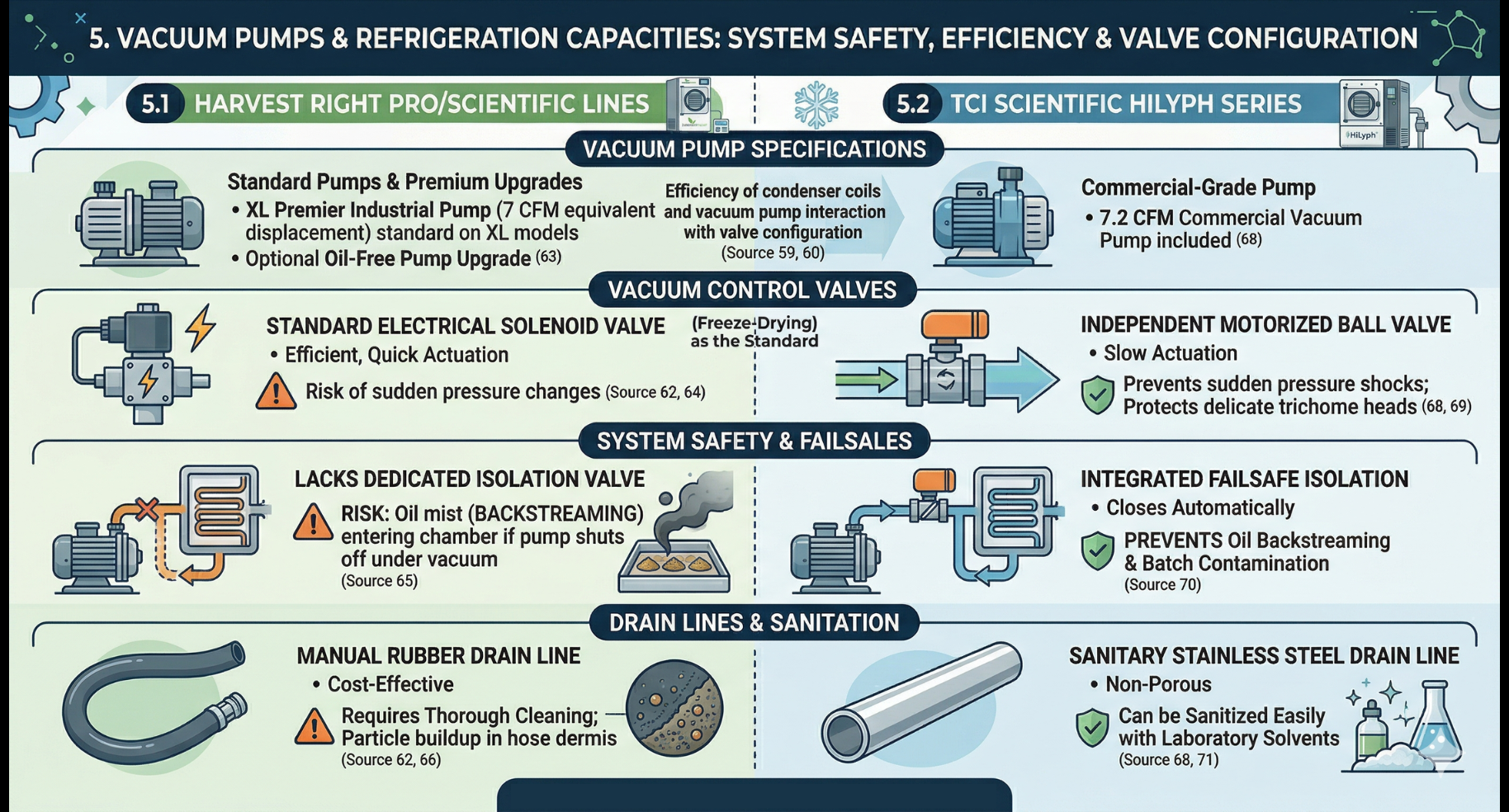
The interaction between the condenser coils and the vacuum pump determines efficiency, while the valve configuration determines system safety.
5.1 Harvest Right: Standard Valves and Premium Pumps
Harvest Right units utilize a standard electrical solenoid valve for vacuum control and a manual ball valve for the drain line. The XL models come standard with an XL Premier Industrial Pump (with a 7 CFM equivalent displacement) or an optional Oil-Free pump upgrade.
Consumer Impact:
Solenoid valves actuate very quickly, which is efficient but can create sudden pressure changes. Because the platform lacks a dedicated isolation valve between the pump and the chamber, there is a risk of oil mist (backstreaming) entering the chamber if the pump shuts off under vacuum. The manual rubber drain line is cost-effective but requires thorough cleaning to prevent particle buildup in the hose dermis.
5.2 TCI Scientific HiLyph: Isolation Valves and Sanitary Lines
HiLyph units include a 7.2 CFM commercial vacuum pump. The system utilizes an independent, motorized ball valve between the pump and the chamber, alongside a sanitary stainless steel drain line.
Consumer Impact:
The motorized ball valve actuates slowly, preventing sudden pressure shocks that could displace delicate trichome heads. More importantly, it acts as a failsafe that closes automatically to physically isolate the pump, preventing oil backstreaming and batch contamination. The stainless steel drain line is non-porous and can be sanitized easily with laboratory solvents.
6. Refrigerant Chemistry, Hardware Matching, and Facility Compliance
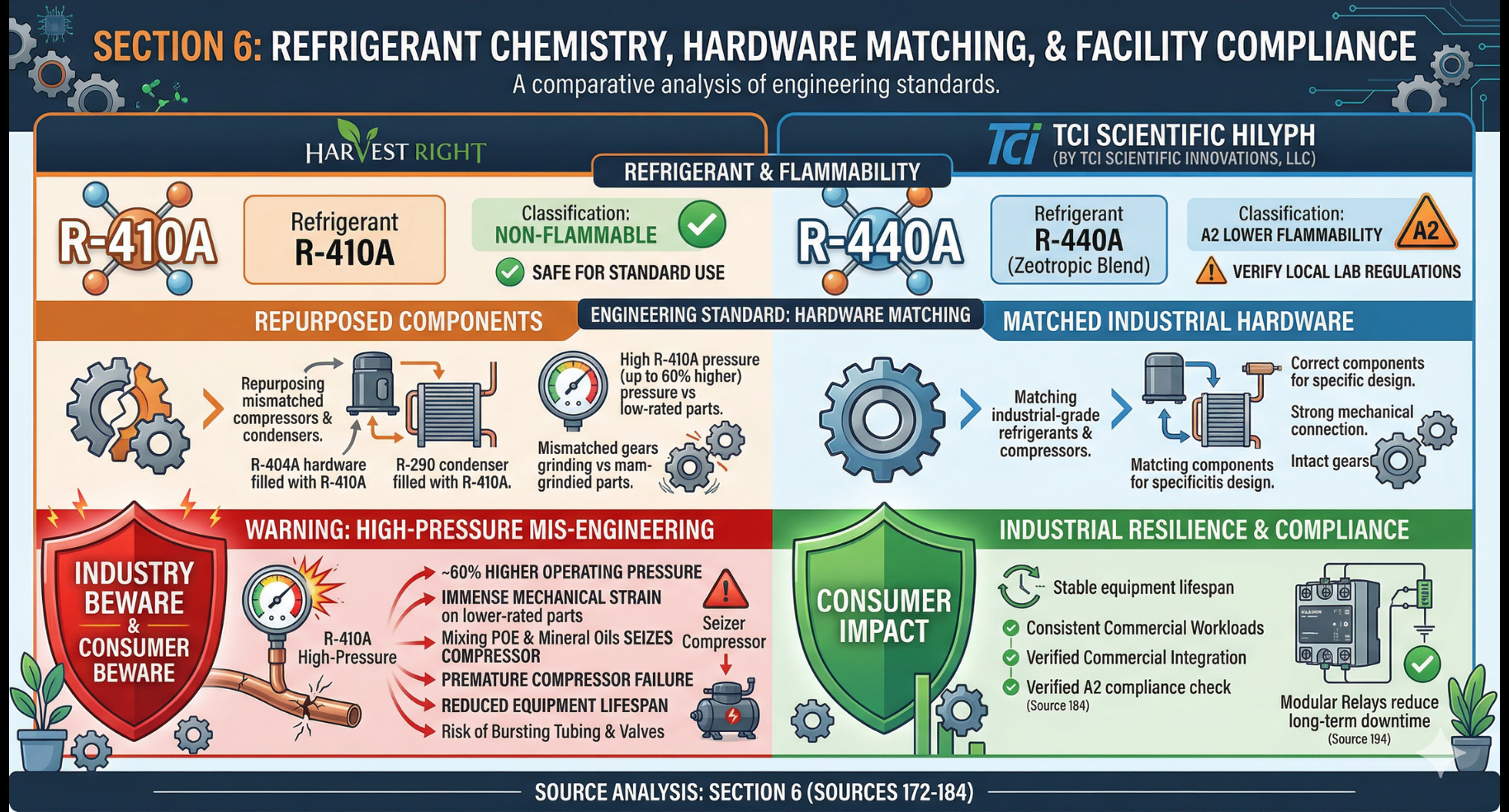
Harvest Right: Harvest Right systems utilize R-410A refrigerant. However, mechanical inspections indicate that these systems frequently repurpose condenser units originally designed for different refrigerants. Specifically, standard models often utilize R-404a compressors and condensers filled with R-410A, while the XL models utilize an R-290 condenser filled with R-410A.
Consumer Impact & Industry Beware:
R-410A is a non-flammable refrigerant, meaning the machine can be integrated into most environments without navigating strict fire codes.
However, HVAC industry best practices strictly warn against mismatching refrigerants with incompatible hardware. R-410A operates at significantly higher vapor pressures—up to 60% higher than older refrigerants like R-404a. Charging a system with a high-pressure refrigerant when the condenser and compressor are rated for lower-pressure refrigerants places immense mechanical strain on the components. Potential consequences of this mismatched engineering include reduced equipment lifespan, premature compressor failure, and the risk of bursting or rupturing copper tubing and valves under pressure. Furthermore, mixing incompatible refrigerants with improper lubricating oils (e.g., POE vs. mineral oil) can cause the compressor to seize.
TCI Scientific HiLyph:
HiLyph tabletop models utilize R-440A, a specialized zeotropic blend refrigerant.
Consumer Impact:
R-440A carries an ASHRAE classification of A2 (Lower Flammability). While less volatile than highly flammable A3 hydrocarbon gases, it still carries a flammability rating. Commercial consumers may need to verify local regulatory requirements when integrating A2 appliances into standard laboratory environments.
7. User Interface and Customer Support
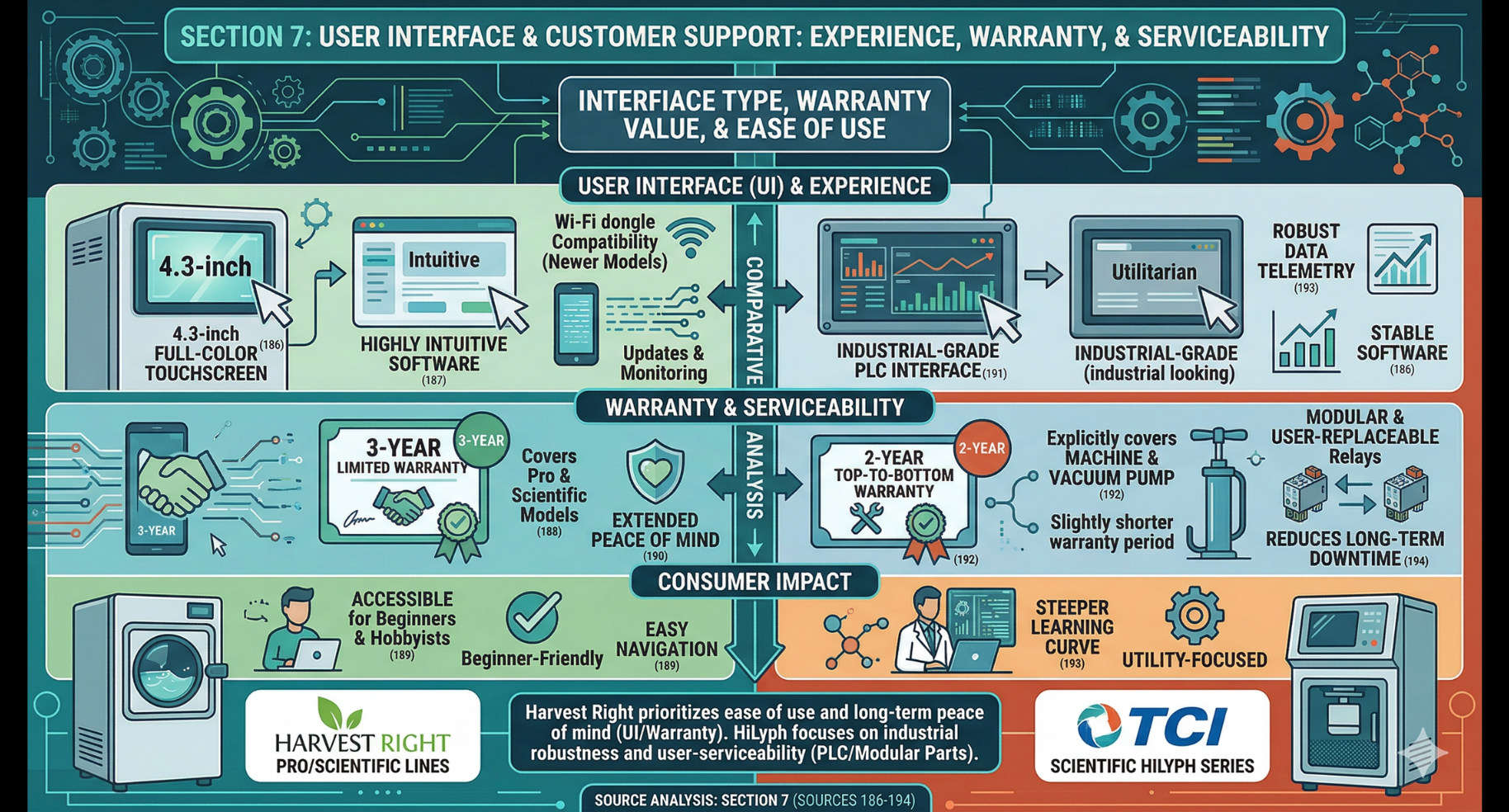
Harvest Right: Harvest Right systems feature a modern, 4.3-inch full-color capacitive touchscreen interface. The software is highly intuitive, and newer models offer Wi-Fi dongle compatibility for easier software updates and monitoring. Harvest Right provides a 3-year limited warranty on their Pro and Scientific models.
Consumer Impact:
The user-friendly interface is accessible for beginners and hobbyists, allowing for easy navigation. The 3-year warranty provides extended peace of mind for the initial investment.
TCI Scientific HiLyph:
The HiLyph platform utilizes an industrial-grade PLC interface identical to those found on macro-industrial units. TCI Scientific offers a 2-year top-to-bottom warranty that explicitly covers the machine and the vacuum pump.
Consumer Impact:
While the PLC offers highly stable software and robust data telemetry, the utilitarian interface presents a steeper learning curve. The solid-state relays are modular and user-replaceable, reducing long-term downtime, though the warranty period is slightly shorter than its competitor's.
8. Summary
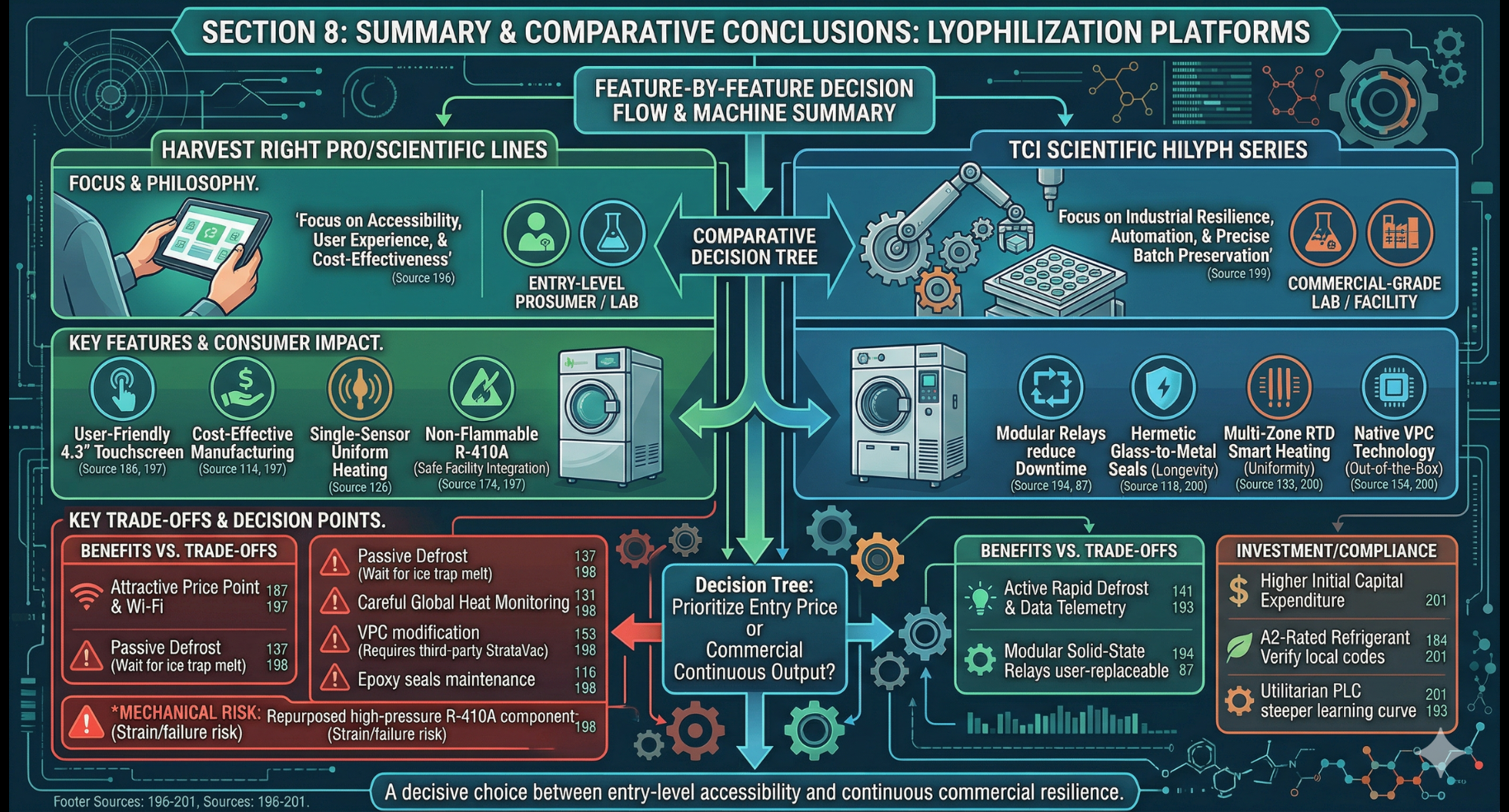
Harvest Right Pro/Scientific focuses on accessibility, user experience, and cost-effectiveness. By utilizing non-flammable refrigerants, a full-color touchscreen, and an attractive price point, it serves as an excellent entry system. The trade-offs for the consumer involve managing passive defrosting, monitoring single-zone heating profiles, utilizing third-party hardware for Vapor Pressure Control, maintaining standard epoxy seals, and accepting the mechanical risks of utilizing R-410A refrigerants in mismatched, repurposed condensers.
TCI Scientific HiLyph
focuses on industrial resilience, automation, and precise batch preservation. By integrating hermetic glass-to-metal seals, multi-zone RTD heating, active fan
defrosting, matching industrial-grade refrigerants and compressors, and including native Vapor Pressure Control, the system is designed to run continuous commercial loads without external add-ons. The trade-offs include a higher initial capital expenditure, an A2-rated refrigerant, and a more utilitarian industrial software interface.
Ready to work with TCI Scientific Innovations?
Let's connect! We’re here to help.
Send us a message and we’ll be in touch.
Or give us a call today at 18774379379
Agency Contact Form
More Marketing Tips, Tricks & Tools
TCI Scientific Innovations, LLC's Blog